AFT Fathom Determines Cause of Failures: Emergency Cooling Water Ride-through System
AFT Fathom™ Case Study
Swanson Rink | Data Center Chilled Water System | General Facility

“Using the Fathom model was much more efficient than…[physically]
opening and closing valves to test scenarios. Fathom allowed one
person to run tests instantaneously, which is a much more efficient use
of…time and…money.”
– Rory Heim, Mechanical Engineer
PROBLEM
- The emergency cooling water tank experienced negative pressure, causing collapse when system was turned on
- Field tests to understand the ultimate cause were not feasible
ANALYSIS
- AFT Fathom was used to test what scenarios would cause negative pressures
- Combinations of open and closed valves were the focus
SOLUTION
- Identified and fixed the problematic valves
- Also discovered certain valves would cause the opposite problem when charging the tanks – overpressure that could open relief valves
Ready to try AFT Fathom?
Problem Explained
Swanson Rink was tasked with developing a chilled water distribution system in an undisclosed data center, along with a method of providing cooling for a period of time (ride-through) if the central chilled water plant was off line for some reason. The ride-through will provide cooling for the data center for 30 minutes allowing the generator plant to start and also for the chillers to restart in the event of things such as power failure, tornadoes, etc. When the chillers are restarted and are providing chilled water to the data center cooling systems again, the storage tanks are full of warm water. At this point a set of valves open, and a small capacity charging pump starts to divert a small amount of chilled water from the main system to the storage tanks to recharge them, returning the system to its preemergency condition.
Tools & Analysis
When engineers commissioned the cooling water storage tanks for the emergency ride-through scenario, one tank experienced unexpected negative pressure and failed, caving inwards. Engineers suspected the cause to be certain valves not opening correctly, but were not able to rerun any field tests that might damage the system further. Rory Heim, mechanical engineer at Swanson Rink, used AFT Fathom to correlate to physical results seen in the field rather than numerical data.
He used an AFT Fathom model to determine which valve closures would result in the system failures they saw in the field and was able to identify and fix the problems which were difficult to recognize visually because of the orientation of the system components. A similar problem was encountered when recharging the tanks and the AFT Fathom model was used again to identify a valve opening issue that caused a tank to over pressurize and trigger relief valves.
Solutions & Benefits
When asked about the benefits of AFT Fathom, Heim said, “Fathom allowed Swanson Rink to test many scenarios; avoiding further system destruction and with no unintended consequences to the building. Using the Fathom model was much more efficient than running around the mechanical room opening and closing valves to test scenarios. On the day the charging problem was discovered, six people were in the mechanical equipment room for the entire day, running tests and trying to determine the cause of the relief valve activating. Fathom allowed one person to run tests instantaneously, which is a much more efficient use of those six people’s time and the owner’s money.”
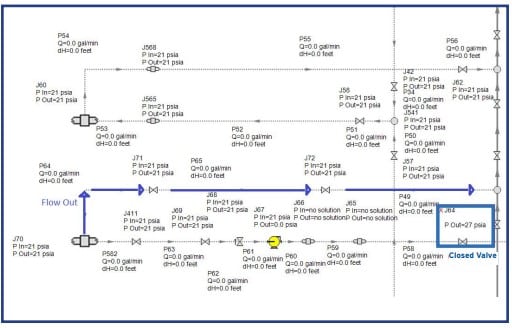
AFT Fathom Model: Scenario showing negative pressure and tank failure
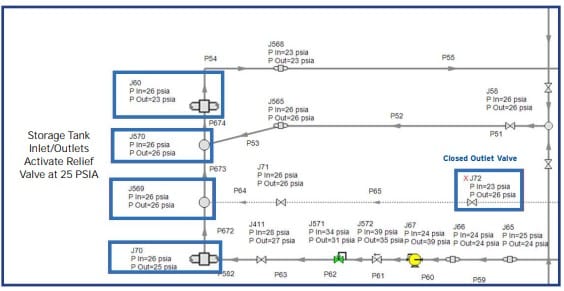
AFT Fathom Model: Scenario showing tank overpressurization, triggering relief valves