AFT Impulse Validates Flow Rate Increase at Liquefied Natural Gas Plant
AFT Impulse™ Case Study
CB&I | Boil-Off Condenser System | Liquefied Natural Gas

“By using the 3D modeling views with the Visual Reports
tools and capabilities the software has, it helps in
presenting the results in a well-summarized approach.”
-Denis Escobar, Process Engineer
PROBLEM
- 60% increase in LNG pipeline throughput required hydraulic analysis
- Increased flow created additional potential for waterhammer and its resulting forces
ANALYSIS
- AFT Impulse models of both pre-expansion and post-expansion were created
- Visual Report and isometric drawing mode made results easy to present
SOLUTION
- Increased flow did not cause surge pressure to exceed allowable pressure
- Stress analysis from Impulse forces confirmed existing supports were sufficient
Ready to try AFT Impulse?
Problem Explained
CB&I was tasked with performing a hydraulic analysis of a liquefied natural gas (LNG) plant expansion. The plant was built by CB&I in 1999, and the owner recently requested an increase in the send-out rate to the pipeline.
The flow rate needed to be increased by almost 60%, going from 64,800 ft3/hr (1,800 m3/hr) to 102,600 ft3/ hr (2,900 m3/hr).
One of the customer’s main concerns was the sendout line to the boil-off gas (BOG) condensers and the possibility of pressure surges, as the level control valves close within three seconds. Denis Escobar, process engineer at CB&I, used AFT Impulse to model and analyze the expansion. Given CB&I had designed the original facility, piping isometrics and a 3D model of the plant were readily available.
Tools & Analysis
The AFT Impulse workspace was created with the 3D model in mind. Escobar said this approach, including the use of the Visual Report tool in AFT Impulse, helped provide a visual of the plant space and the location of equipment (see Figure 1). Without a benchmark for the original design, Escobar had to create two scenarios for the plant model—one for the pre-expansion and a second for the desired expansion.
The pre-expansion scenario included a flow of 64,800 ft3/hr (1,800 m3/hr), with the send-out coming from Tank A using three in-tank pumps all rated for 24,200 ft3/hr (690 m3/hr) at 535 ft (160 m) of head and 76.5% efficiency. The expansion scenario included a flow of 102,600 ft3/ hr (2,900 m3/hr), with the send-out coming from Tank A and Tank B using six in-tank pumps also all rated for 24,200 ft3/hr (690 m3/hr) at 535 ft (160 m) of head and 76.5% efficiency.
Solutions & Benefits
Using AFT Impulse, Escobar determined that with the increased flow, the pressure in the system would remain below design pressure of 15.5 barG (225 psig) (see Figure 2). This reduced the concern of pressure surges resulting from valve closures. Since there was no benchmark for the pre-expansion flow rate, the project team requested additional information regarding the stress to which the system would be subjected.
Using the two scenarios and the force capabilities of AFT Impulse, different points in the systems were analyzed and the changes in subjected forces were determined.
The data was provided to a different group to perform a stress analysis of the system. The group determined the forces would increase using the new surge conditions but would remain within the design parameters. Escobar said one of the advantages of using AFT Impulse to model the LNG plant was its ease of use.
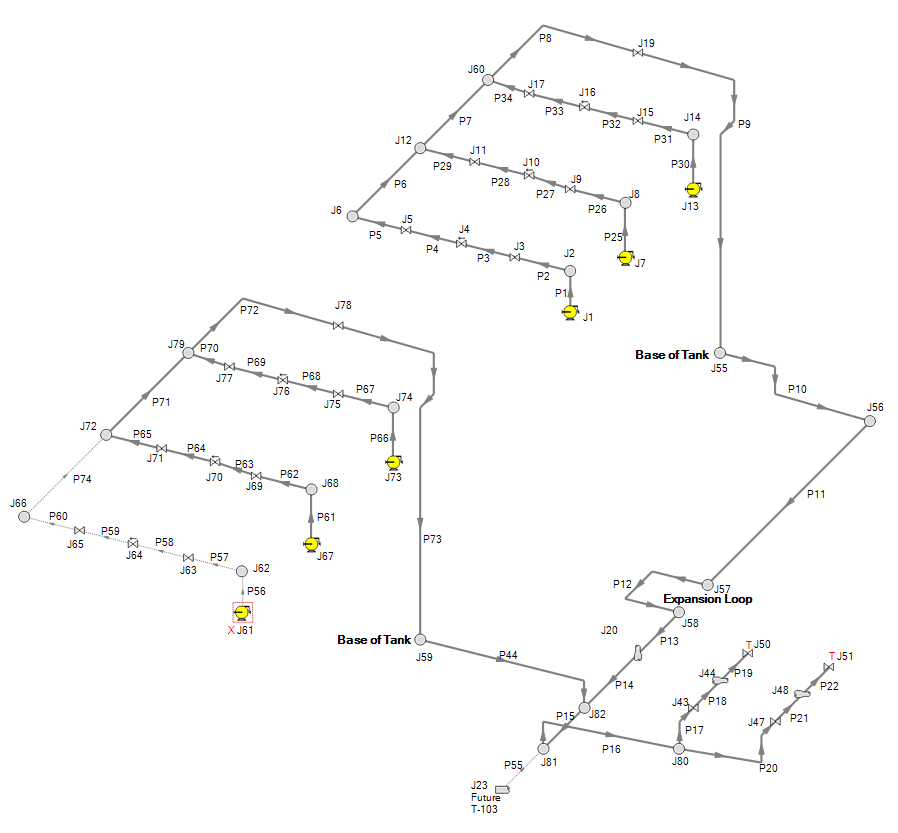
FIGURE 1: AFT Impulse model of LNG pipe system delivery flow to boil-off condensers
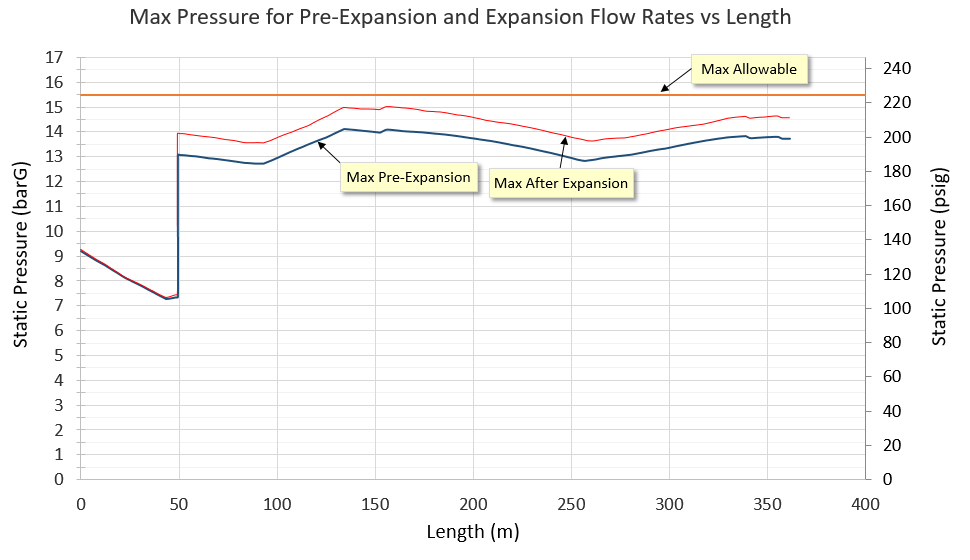
FIGURE 2: Max predicted surge pressures after LNG system
flow expansion remain below the maximum allowable