Nuclear Power Station Service Water Pump NPSH Hydraulic Model Using AFT Fathom
AFT Fathom™ Case Study
Duke Energy | Service Water System | Nuclear Power

“The roughness and scaling factors were… slightly adjusted to obtain a very
accurate benchmark to actual test data (0.1 to 0.2 psig).”
– Norman Stambaugh, Senior Engineer
PROBLEM
- Safety-critical cooling water system faced corrosion from years of use
- The corresponding reduction in NPSHa for cooling water pump could lead to catastrophic failure
ANALYSIS
- AFT Fathom model was developed and calibrated against field data
- Model accounted for piping configuration as well as additional roughness and constriction caused by corrosion
SOLUTION
- Worst case scenario included max operating temperature, low liquid feed level, and assumed strainer fouling
- Potential pressure recovery from cleaning pipes was evaluated
Ready to try AFT Fathom?
Problem Explained
Nuclear Service Water (RN) systems circulate the water that cools the plant’s heat exchangers and other components before dissipating the heat into the environment. Because this is a safety-critical system, it is essential to accurately understand how the system works under varying operating conditions, and under Design Basis Accident (DBA) Conditions.
According to Norman Stambaugh, Senior Engineer at Duke Energy, to assure that the RN system can adequately perform its safety function, it must be demonstrated that the RN pump NPSHr can be met under DBA conditions. Over the years, corrosion in the RN pump suction piping has occurred, thus reducing the NPSHa.
Solutions & Benefits
To analyze this degradation, an AFT Fathom model of the RN pump suction piping was developed and benchmarked. This model not only accounts for the details relating to the piping configuration but also for the details relating to the roughness and constriction of the piping due to the build-up of corrosion over time. It also provides the ability to input most limiting conditions, such as maximum temperatures and minimum levels for the lake and pond supplies, as well as various amounts of assumed RN strainer fouling.
Using AFT Fathom, Duke Energy was able to benchmark corroded pipe performance, and accurately model the potential pressure recovery after cleaning the pipes.
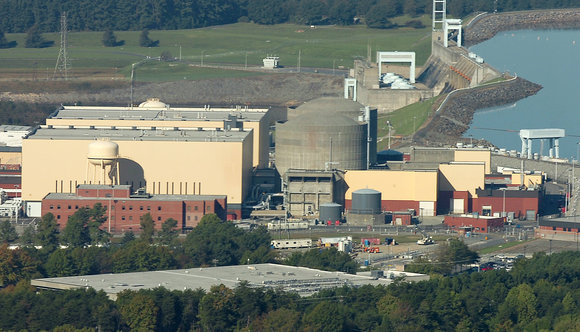
McGuire Nuclear Power Station
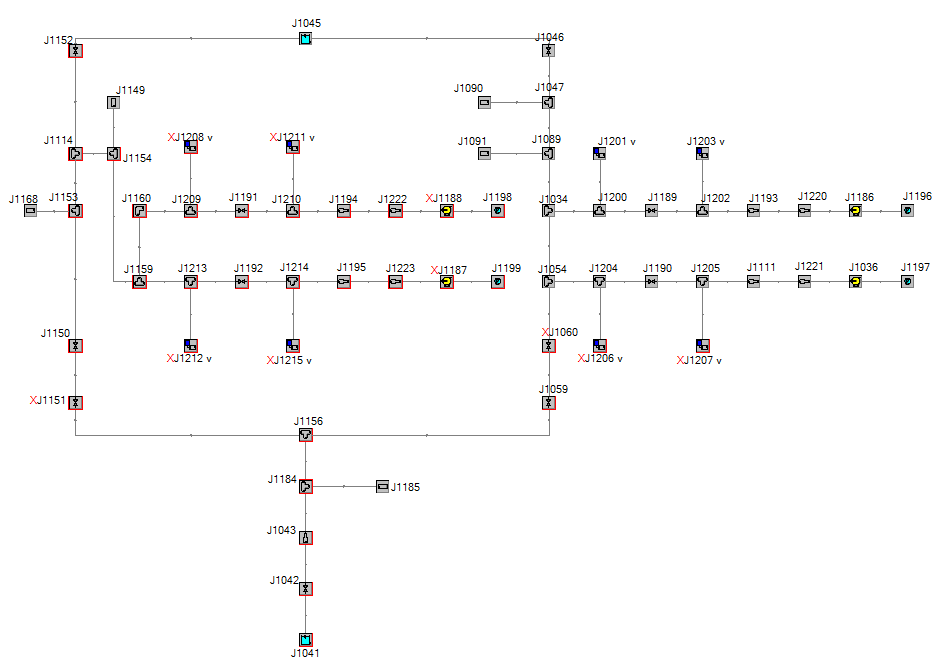
McGuire Nuclear Station RN pump NPSH hydraulic model